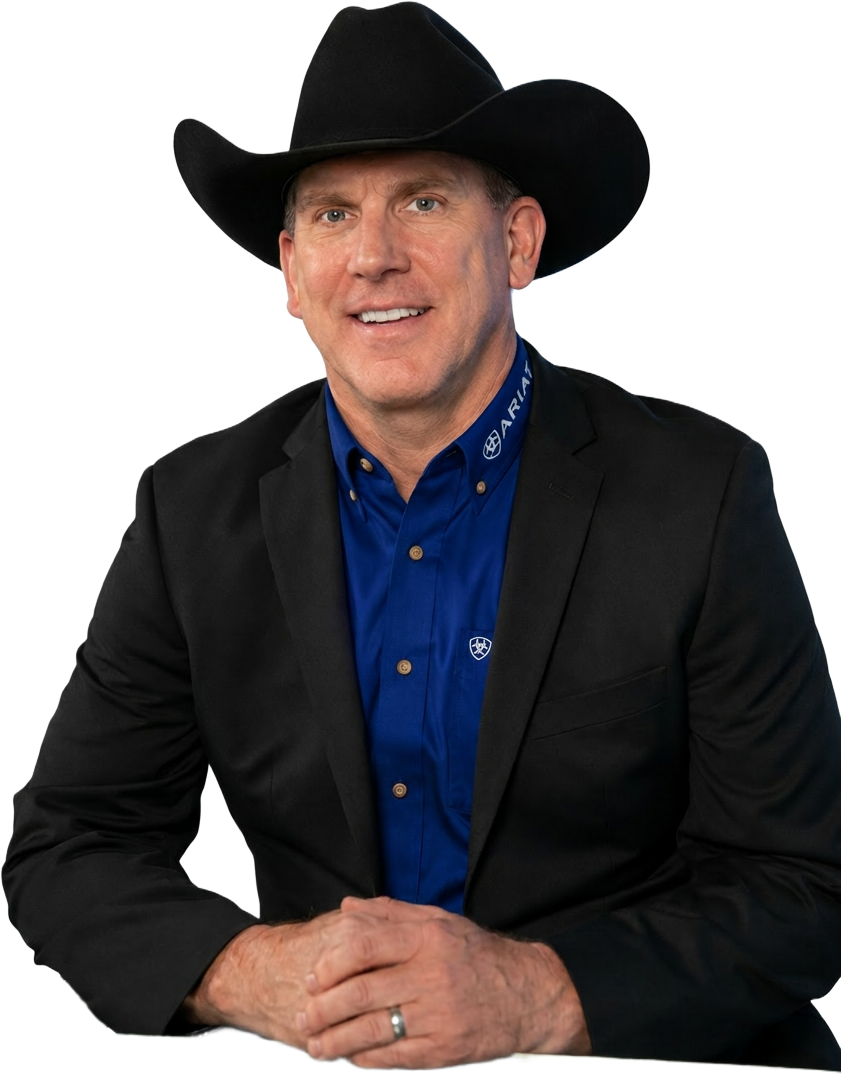
Rancher, Trader, Veteran.
I'm Jon Alexander. I run a small family ranch outside Hall, Montana, and I trade stocks from my office on the ranch. Two jobs, one desk. The livestock keep me honest about weather, feed, and time. Trading is how I generate the income that keeps it all going.
Before any of that, I spent fifteen years in the Navy, and it shaped how I think about risk more than anything I've done since. I enlisted and went through Nuclear Power School, which is exactly as unforgiving as it sounds. You don't get partial credit for understanding a reactor. Either you know the system's cold, you respect the margins, and you follow the procedure in front of you — or you don't, and the consequences aren't abstract. That kind of training doesn't leave you. It's where I first learned that discipline isn't about being cautious for its own sake; it's about knowing exactly where your limits are and never testing them casually.
The Navy sent me to the University of Idaho and later the University of Arizona to finish my degree. My two sons were born during those years, which meant I was studying accounting, finance and engineering, while changing diapers in the same stretch of my life — an early lesson in juggling two things that both demand your full attention, since neither one cares that the other exists.
After graduating, I earned my commission as an officer and headed into Naval Flight Training, a full reset after years of nuclear systems: new material, a new set of instructors, and a new way of being tested under pressure. I earned my wings as a Naval Flight Officer and reported to VQ-1 out of Oak Harbor, Washington, where I flew reconnaissance missions that put the same nuclear-trained instincts to work in a different environment — reading a system in real time, trusting the checklist, and knowing when something didn't look right before it became a problem. I finished my career teaching Naval History and Warfare at the University of Colorado, Boulder, which gave me a longer view of the same lesson: confident people, from admirals to traders, tend to find out they were wrong at the worst possible time.
I carried all of that into trading, whether I meant to or not. My two sons work with me now, on the ranch and in the business, and a lot of what I try to pass on to them is the same thing the Navy tried to pass on to me — respect the margins, follow the process, and don't confuse confidence with being right.
I started out investing for the long term, the way you're "supposed to". I soon realized that doesn't pay the bills. Buying great companies and holding them forever is good advice for a different time and place.
How many companies that existed in 1980 are still around today? Better question: how many companies trading right now will still be standing in 20 or 30 years? To know that for certain, you'd have to be Marty McFly from Back To The Future.
I don't have a time machine and I'd bet you don't either. What I have is a trading system that I personally trust with my own money and have taught my entire family how to do.
This letter is what I would have wanted to read back when I was starting out: short, plain-spoken and brutally honest. After all, mine and my family's retirement future is at stake.
Nothing on this site is personal investment advice. It's one trader's notebook, ideas and methods, open to the world. I'm glad you are here.